
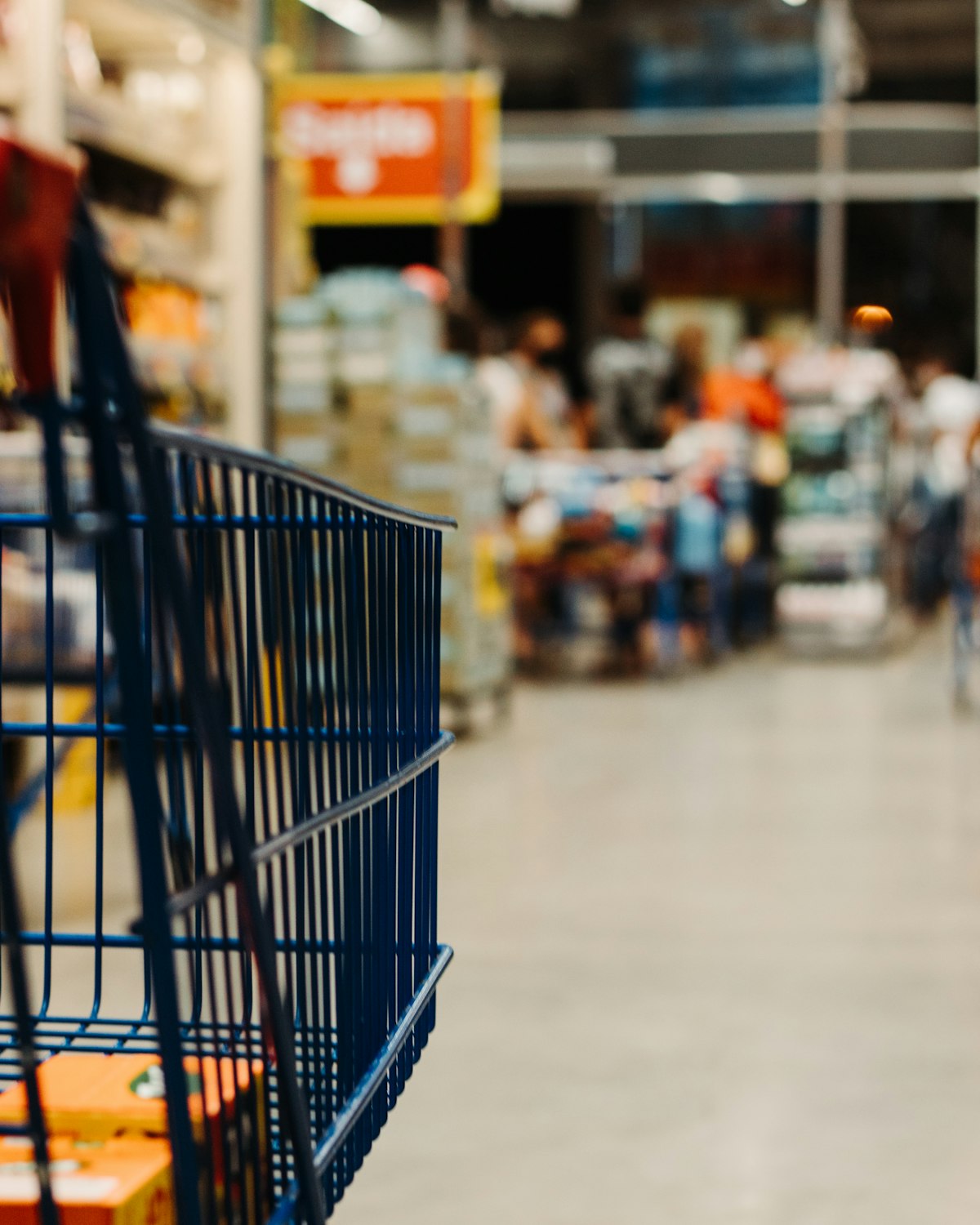
For FMCG brands in Australia and New Zealand, two channels have quietly become inseparable in 2026: supermarket-derived audience data, and programmatic digital out-of-home. Used together, they turn DOOH from a brand-building bet into a measurable, basket-linked performance channel. Used in isolation, they leave most of the value on the table. This is the new power couple of FMCG media — and here's why it matters.
Why supermarket data is the most valuable signal in FMCG advertising
Loyalty programs at Australia's major grocers cover an extraordinary share of the population. Between Everyday Rewards (Woolworths) and Flybuys (Coles), well over 15 million Australians scan a loyalty card on a regular basis — a level of household coverage no other commercial dataset comes close to. Add Chemist Warehouse, Endeavour Group and a growing roster of mid-market retailers, and you're looking at the most accurate, deterministic, deduplicated picture of category-level demand in the country.
What makes this data so valuable for FMCG isn't just the scale. It's the granularity. Supermarket data tells you who's buying what, how often, in what basket, at what price, in which suburb — and crucially, who switched brand last week and who didn't. For a category manager or media planner working on a tight calendar, that is gold. The challenge has always been: how do you activate that gold beyond email and on-site retail media?
Where programmatic DOOH fits in
Programmatic DOOH is the channel that finally makes supermarket data work outside the four walls of the retailer. With clean-room and privacy-safe activation, retailer audience segments — heavy buyers, switchers, lapsed customers, category triers — can be modelled to geographies and dayparts, then activated against DOOH inventory in those exact catchments.
The practical effect is dramatic. Instead of buying a generic 'national grocery shopper' campaign, an FMCG brand can put its creative in front of high-frequency switchers in the postcodes around a specific banner group's stores, during the dayparts that precede the typical weekly shop. And because supermarket data closes the loop with verified basket outcomes, you can measure not just exposure, but lift in actual sales.
Activate retailer audience segments — switchers, lapsed buyers, category triers — against DOOH inventory in real time.
Plan by catchment, not by panel — focus spend on the screens nearest the stores that matter most to your category.
Daypart against the shopping mission — pre-shop windows behave very differently to post-shop windows.
Close the loop with verified basket data, not modelled estimates or self-reported recall.
What the data shows: DOOH + retailer data outperforms either alone
Industry brand-lift studies through 2025 consistently show that DOOH campaigns activated against retailer audience data deliver materially higher uplift than either retailer on-site media or generic DOOH alone. In FMCG categories specifically, blended campaigns are seeing double-digit improvements in unaided brand recall, category consideration, and — most importantly — incremental basket penetration in the weeks following the flight.
Part of the reason is reach. On-site retail media is precise but capped at the people who already shop the retailer's digital channels. Generic DOOH is broad but blunt. Combining the two extends accurate retailer targeting into the moments when shoppers are out in the world, near the store, primed to switch. That's a hard combination to beat for a launch, a price-led promo, or a defence campaign against a fast-growing private label.
Supermarket data without activation is just a spreadsheet. DOOH without supermarket data is just a beautiful billboard. Put them together with the right measurement layer and you finally have an FMCG channel that's accountable to actual basket lift, not just impressions. — Eric Fan, CEO, Lumos
Five things FMCG brands should get right
We see the same handful of decisions separate the campaigns that scale from the ones that stall. None of them are technically hard — but most are organisationally hard, because they cut across category, shopper marketing, brand and media teams that don't always plan together.
Pick the right retailer partner for the brand objective — not all loyalty datasets behave the same in your category.
Brief shopper marketing and brand media together. Retailer-data-powered DOOH falls between the two and dies in silos.
Insist on closed-loop measurement against verified sales — not just impressions and CPM benchmarks.
Build creative variants designed for the moment, not just the brand book — pre-shop, in-store-adjacent and post-shop all read differently.
Treat retailer data as an always-on input, not a campaign one-off. The biggest gains come from continuous activation.
What's next for the supermarket-DOOH stack
The next twelve months will be about three things. First, deeper identity resolution between retailer loyalty data and DOOH exposure, so brands can move beyond catchment modelling to true cross-channel attribution. Second, AI-driven optimisation that continuously rebalances DOOH spend by store, by daypart and by audience segment based on incremental basket lift — not click-through or completion rate. Third, more open and standardised measurement frameworks across retailers, so brands can compare apples to apples across Coles 360, Cartology, EndeavourX and the rest.
For FMCG marketers, the implication is clear. The brands moving fastest in 2026 are the ones that have stopped treating retailer data and DOOH as separate disciplines and started treating them as a single, accountable channel. The economics favour it. The measurement supports it. The competitive ground is shifting toward it.
If you're an FMCG brand or agency looking to activate retailer data against programmatic DOOH in AU or NZ, Lumos can help you plan, buy, and measure it end-to-end. Get in touch at spotlumos.com to talk through what the right power couple looks like for your category.
[SCHEMA_ORG]{"@context":"https://schema.org","@type":"Article","headline":"Supermarket Data and DOOH: The New Power Couple for FMCG Brands","description":"Supermarket Data and DOOH: The New Power Couple for FMCG Brands","image":"https://images.unsplash.com/photo-1601598851547-4302969d0614?w=1200&q=80&fm=jpg","datePublished":"2026-06-08","dateModified":"2026-06-08","author":{"@type":"Organization","name":"Lumos","url":"https://spotlumos.com"},"publisher":{"@type":"Organization","name":"Lumos","url":"https://spotlumos.com","logo":{"@type":"ImageObject","url":"https://spotlumos.com/logo.png"}},"mainEntityOfPage":{"@type":"WebPage","@id":"https://spotlumos.com/au/resources/supermarket-data-and-dooh-power-couple-for-fmcg-brands-2026"},"keywords":"programmatic DOOH, digital out-of-home, audience intelligence, media planning","about":{"@type":"Thing","name":"Programmatic DOOH Advertising"},"isPartOf":{"@type":"WebSite","name":"Lumos","url":"https://spotlumos.com"}}


